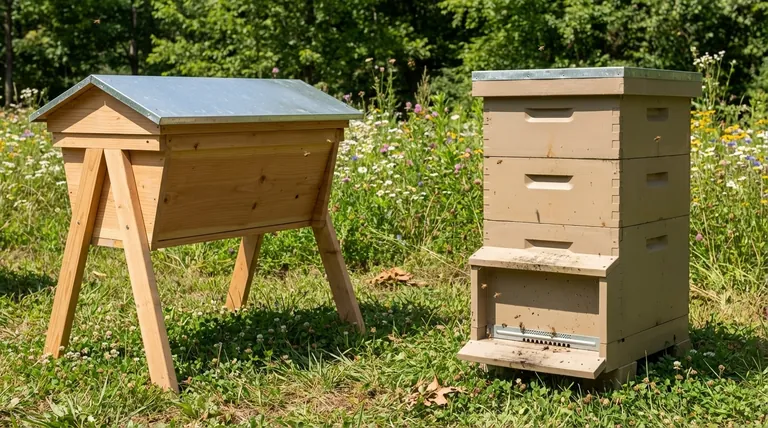
Choosing the right beehive material isn’t just about personal preference—it’s a decision that impacts your bees’ health, your operational efficiency, and even your environmental footprint. Whether you’re a commercial beekeeper managing hundreds of colonies or a distributor sourcing equipment, understanding the trade-offs between plastic and wood hives ensures you invest in solutions that align with your goals.
Plastic vs. Wood Beehives: A Comprehensive Comparison
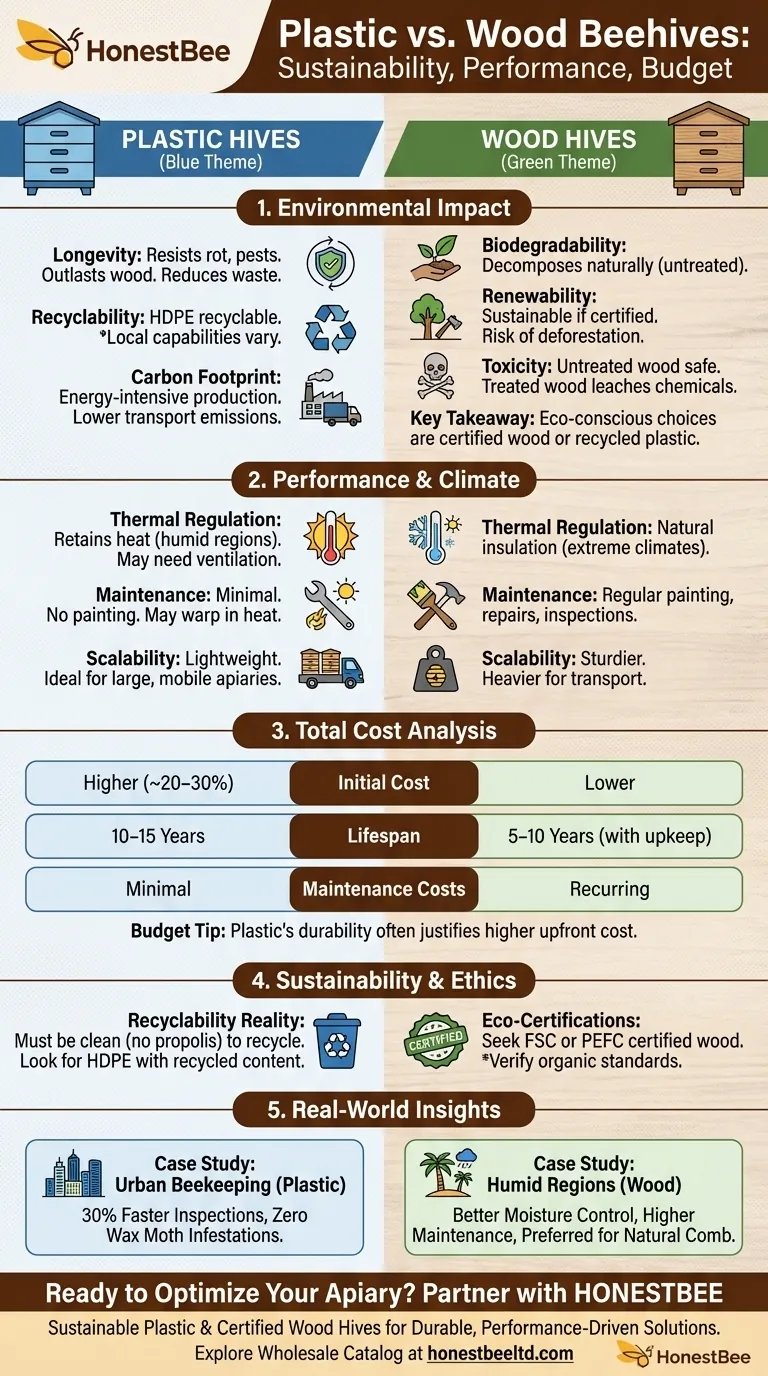
Environmental Impact Beyond Renewability
While wood is often perceived as the "greener" choice due to its biodegradability, plastic hives offer surprising sustainability advantages:
- Longevity: Plastic hives resist rot, pests, and moisture damage, often outlasting wood by years. This reduces the frequency of replacements and resource consumption.
- Recyclability: High-density polyethylene (HDPE) hives can be recycled at end-of-life, though local recycling capabilities vary. Wooden hives, unless untreated, may release toxins when burned or discarded.
- Carbon Footprint: Plastic production is energy-intensive, but lightweight hives lower transportation emissions. Wood’s renewability is offset by deforestation risks if not sourced responsibly.
Key Takeaway: For eco-conscious beekeepers, certified sustainably sourced wood or recycled plastic hives are the most ethical choices.
Practical Performance in Different Climates and Scales
-
Thermal Regulation:
- Wood: Naturally insulates against temperature swings, ideal for extreme climates (e.g., cold winters or hot, dry summers).
- Plastic: Retains heat in humid regions, potentially requiring ventilation modifications like screened bottoms.
- Maintenance: Plastic hives need less upkeep (no painting or rot repair), but may warp in sustained heat. Wood requires seasonal inspections for mold or beetle damage.
- Scalability: Plastic’s lightweight design suits large apiaries with frequent hive movements. Wood is sturdier for stationary setups but heavier to transport.
Case in Point: Urban beekeepers favor plastic for its lightweight and pest-resistant traits, while traditionalists in humid regions stick with wood for its breathability.
Total Cost Analysis: Upfront Investment vs. Lifetime Value
| Factor | Plastic Hives | Wood Hives |
|---|---|---|
| Initial Cost | Higher (~20–30% more) | Lower |
| Lifespan | 10–15 years | 5–10 years (with upkeep) |
| Maintenance Costs | Minimal | Regular painting, repairs |
Budget Tip: For long-term savings, plastic’s durability often justifies its higher price. Wood is cheaper upfront but incurs recurring costs.
Sustainability and Beekeeping Ethics
Recyclability Myths and Realities
- Plastic Hives: Only eco-friendly if recycled properly. Contaminated plastic (e.g., with propolis) may end up in landfills.
- Wood Hives: Untreated wood decomposes safely, but pressure-treated variants can leach chemicals. Opt for FSC-certified or reclaimed wood.
Aligning Hive Choice with Eco-Certifications
Look for:
- Plastic: HDPE with recycled content (30–50% is common).
- Wood: FSC or PEFC certification for sustainable forestry.
Pro Tip: Some organic certifications prohibit plastic hives—verify standards like USDA Organic or Demeter beforehand.
Real-World Insights for Decision-Making
Case Study: Urban Beekeeping with Plastic Hives
A rooftop apiary in Berlin switched to plastic hives and reported:
- 30% faster inspections due to lighter components.
- Zero wax moth infestations over 3 years, a common issue with wood in cities.
Case Study: Traditional Wood Hives in Humid Regions
A Florida beekeeper using cypress wood hives noted:
- Better moisture control with ventilated tops, preventing mold.
- Higher maintenance (annual repainting) but preferred for natural comb compatibility.
Ready to Optimize Your Apiary? Partner with HONESTBEE
Whether you supply commercial beekeepers or stock equipment for distributors, HONESTBEE’s range of sustainable plastic and certified wood hives ensures you get durable, performance-driven solutions.
Explore our wholesale catalog today—let’s build hive systems that work for your bees and your bottom line.
دليل مرئي
المنتجات ذات الصلة
- فتحات تهوية مستديرة من الفولاذ المقاوم للصدأ للتهوية
- خلايا نحل خشبية بحجم دادانت لتربية النحل
- حامل خلية نحل بأقدام معدنية لخلية نحل للحماية من النمل
- حامل خلية نحل معدني حامل صندوق نحل لتربية النحل
- إطارات خلايا النحل الخشبية لتربية النحل والبيع بالجملة
المقالات ذات الصلة
- How to Optimize Beehive Ventilation: Prevent Disease and Boost Colony Health
- القاتل الصامت في الخلية: لماذا الرطوبة، وليس البرد، هي أكبر تهديد للشتاء
- ما وراء صندوق النحل: لماذا يحدد استثمارك الأول في المنحل نجاحك
- دقة الفوضى: التنقل في المخاطر البيولوجية لنقل خلايا النحل التجارية
- كيفية ضمان بقاء خلية النحل الجديدة: استراتيجيات التغذية ومعالم المستعمرة













