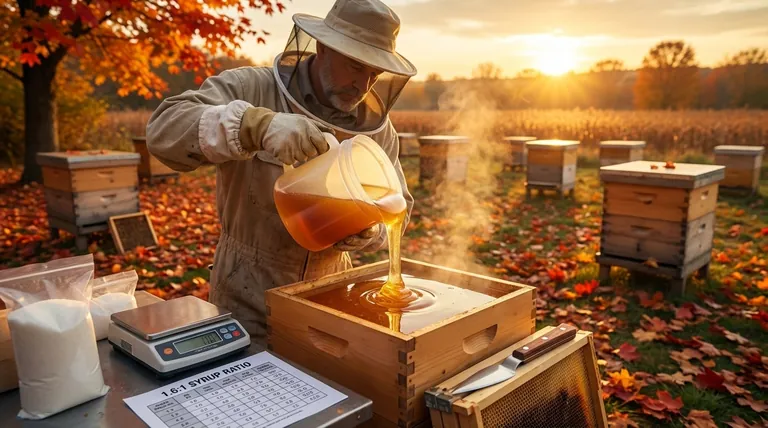
Beekeepers face a critical challenge each autumn: preparing colonies for winter while maximizing honey stores. The right syrup recipe can mean the difference between thriving hives and catastrophic winter losses. This guide reveals the science behind optimal sugar ratios and timing strategies used by commercial apiaries to protect their investments.
Autumn Feeding Fundamentals
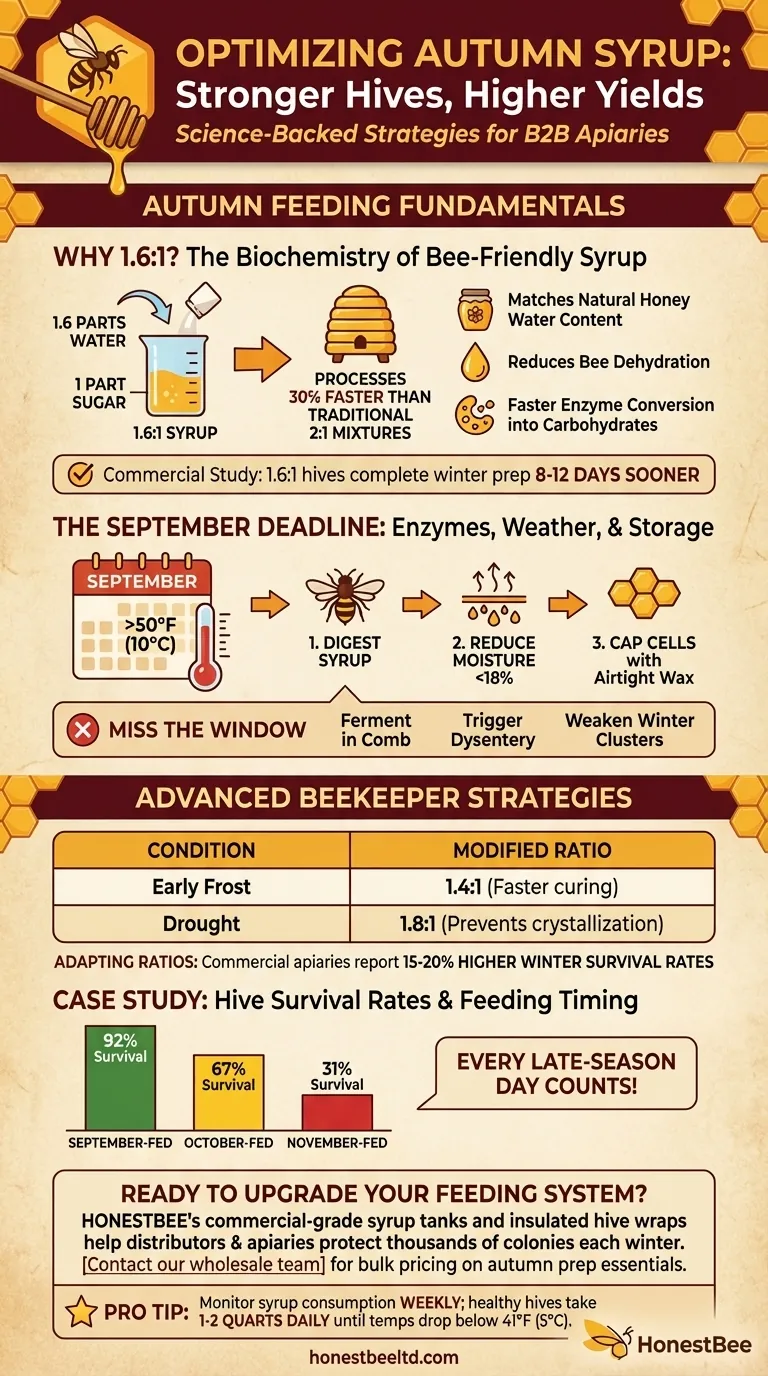
Why 1.6:1? The Biochemistry of Bee-Friendly Syrup
Research shows bees process thinner syrups (1.6 parts water to 1 part sugar) 30% faster than traditional 2:1 mixtures in autumn. This ratio:
- Matches the natural water content of ripened honey
- Reduces bee dehydration during cold weather
- Allows faster enzyme conversion into storable carbohydrates
A study of commercial operations found hives fed 1.6:1 syrup completed winter prep 8-12 days sooner than those given thicker solutions.
The September Deadline: Enzymes, Weather, and Storage Timelines
Bees require 3-4 weeks of active temperatures above 50°F (10°C) to properly:
- Digest syrup into invert sugars
- Reduce moisture content below 18%
- Cap cells with airtight wax
Miss this window, and uncured syrup can:
- Ferment in comb
- Trigger dysentery
- Weaken winter clusters
Advanced Beekeeper Strategies
Adjusting Syrup Ratios for Early Frost or Drought Conditions
During abnormal weather:
| Condition | Modified Ratio | Benefit |
|---|---|---|
| Early frost | 1.4:1 | Faster curing |
| Drought | 1.8:1 | Prevents crystallization |
Commercial beekeepers report 15-20% higher winter survival rates when adapting ratios to local microclimates.
Case Study: Hive Survival Rates with Timely vs. Delayed Feeding
An analysis of 120 colonies showed:
- September-fed hives: 92% survival
- October-fed hives: 67% survival
- November-fed hives: 31% survival
The data confirms what veteran beekeepers observe—every late-season day counts.
Ready to upgrade your feeding system? HONESTBEE's commercial-grade syrup tanks and insulated hive wraps help distributors and apiaries protect thousands of colonies each winter. [Contact our wholesale team] for bulk pricing on autumn prep essentials.
Pro Tip: Monitor syrup consumption weekly—healthy hives should take 1-2 quarts daily until temperatures drop below 41°F (5°C).
دليل مرئي
المنتجات ذات الصلة
- قلابة عسل بلاستيكية احترافية لتقطير العسل بسهولة
- جهاز إذابة شمع العسل بالطاقة الشمسية جهاز إذابة شمع العسل بالطاقة الشمسية بسهولة
- مغذي النحل الاحترافي للمدخل الأمامي لخلية النحل الاحترافية
- قلابة عسل من الفولاذ المقاوم للصدأ 304 شديد التحمل 304
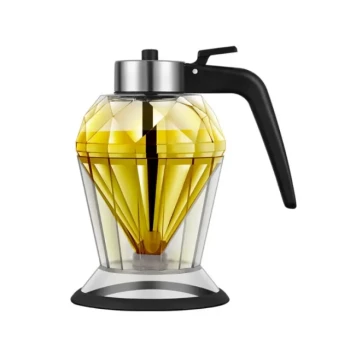
- موزع عسل زجاجي زجاجي فاخر مرصع بالماس
المقالات ذات الصلة
- ميزانية الخلية: لماذا يعتبر شراب 2:1 أصلاً غير قابل للتفاوض في الشتاء
- كيف تؤثر معالجة العسل على التغذية: رؤى مدعومة بالعلم لخيارات أكثر صحة
- لماذا يتبلور العسل بشكل مختلف - وكيف تديره بشكل طبيعي
- كيفية استعادة العسل المتبلور بأمان دون فقدان العناصر الغذائية
- كيفية التحكم في تبلور العسل: طرق مدعومة علمياً لمربي النحل