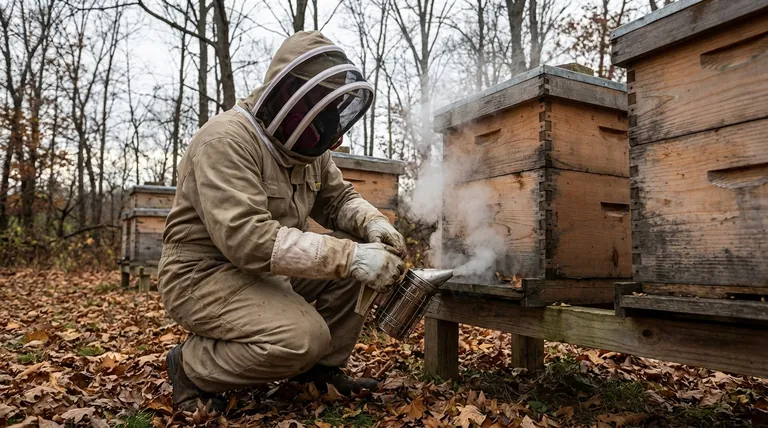
Varroa mites threaten honeybee colonies worldwide, but strategic oxalic acid applications in late fall can reduce mite populations by over 90% while safeguarding bees. This science-backed approach leverages seasonal colony dynamics and mite biology—here’s how to execute it effectively.
The Role of Phoretic Mites in Varroa Destructor Infestations
Why Phoretic Mites Are Vulnerable in Late Fall
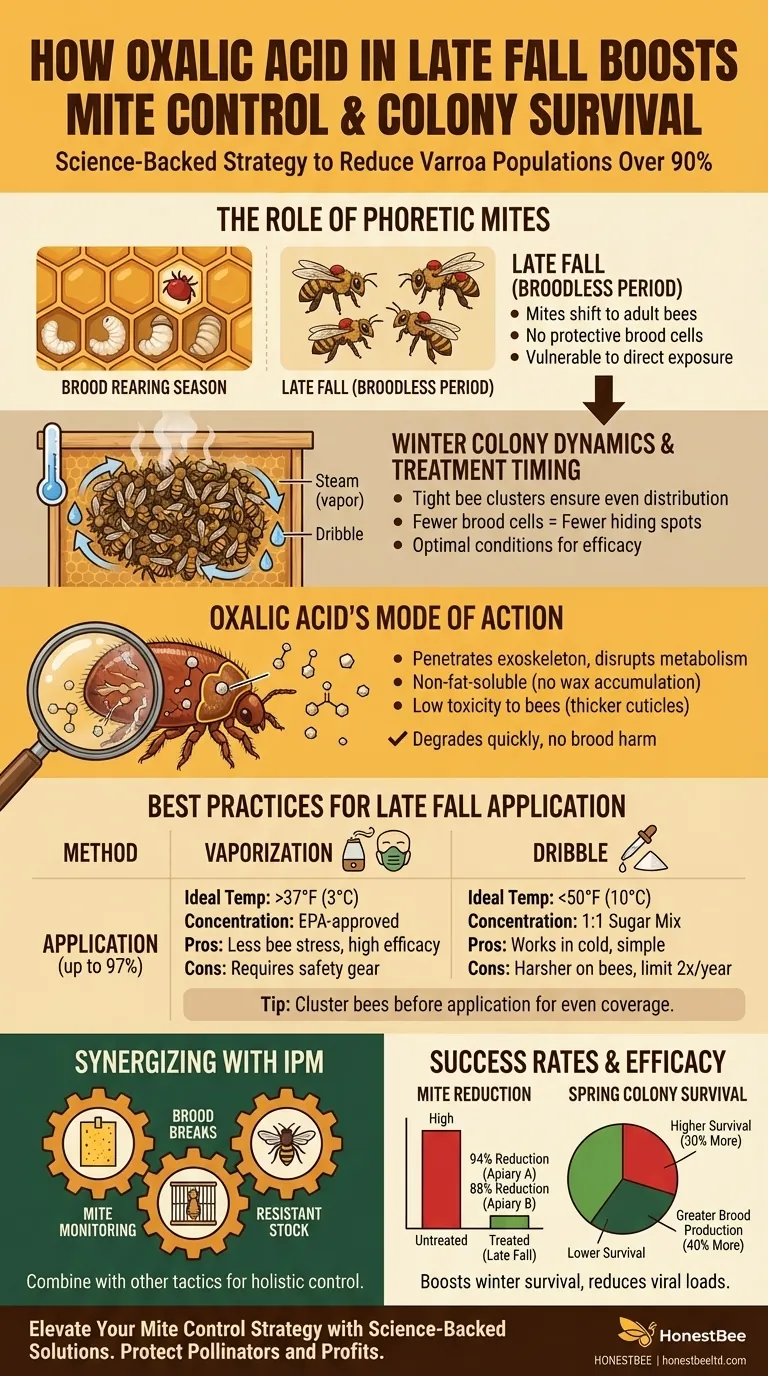
In late fall, Varroa mites shift from reproducing inside brood cells to clinging to adult bees as "phoretic" mites. This phase makes them susceptible to oxalic acid:
- No Brood Protection: With reduced brood rearing, mites lack protective wax cells.
- Direct Exposure: Mites on bees’ bodies absorb oxalic acid through their feet, disrupting their physiology. Research suggests this contact method kills 93–97% of phoretic mites.
How Winter Colony Dynamics Influence Treatment Timing
Winter clustering creates optimal conditions for oxalic acid efficacy:
- Tight Bee Clusters: Bees huddle together, ensuring even distribution of vaporized or dribbled oxalic acid.
- Lower Brood Rearing: Fewer capped brood cells mean fewer mites hiding from treatment.
Key Insight: Late fall applications align with natural mite behavior, maximizing contact while minimizing colony disruption.
Oxalic Acid’s Mode of Action Against Varroa Mites
Chemical Interaction with Mite Physiology
Oxalic acid penetrates mites’ exoskeletons and interferes with their metabolism. Unlike synthetic miticides:
- Non-Fat-Soluble: It doesn’t accumulate in wax, reducing long-term hive contamination.
- Low Bee Toxicity: Bees tolerate it well when applied correctly, as their thicker cuticles offer protection.
Minimal Brood Impact vs. Synthetic Miticides
While synthetic treatments like fluvalinate can leave residues, oxalic acid degrades quickly. Studies show:
- No Brood Harm: Applied during broodless periods, it avoids damaging developing bees.
- Multi-Stage Efficacy: Even with capped brood, staggered treatments reduce mite loads significantly.
Best Practices for Late Fall Oxalic Acid Application
Temperature, Concentration, and Delivery Method Guidelines
| Method | Ideal Temp | Concentration | Pros & Cons |
|---|---|---|---|
| Vaporization | Above 37°F (3°C) | EPA-approved | Pros: Less bee stress; high efficacy (up to 97% mite kill). Cons: Requires safety gear. |
| Dribble | Below 50°F (10°C) | 1:1 sugar mix | Pros: Works in cold; no equipment. Cons: Harsher on bees; limit to 2x/year. |
Tip: Cluster bees by gently smoking the hive before application to ensure even coverage.
Synergizing with Integrated Pest Management (IPM)
Combine oxalic acid with IPM tactics:
- Mite Monitoring: Use sticky boards or alcohol washes pre/post-treatment.
- Brood Breaks: Temporarily remove queen to halt brood production, exposing mites.
- Resistant Stock: Introduce mite-resistant bee breeds like Russian honeybees.
Case Studies and Efficacy Metrics
Success Rates in Reducing Overwintering Mite Populations
- Apiary A: Late fall vaporization cut mite loads by 94%, leading to 30% higher spring colony survival vs. untreated hives.
- Apiary B: Dribble method in cold climates (<50°F) reduced mites by 88%, with minimal bee mortality.
Long-Term Colony Survival Comparisons
Colonies treated in late fall:
- Higher Spring Buildup: 40% more brood production than spring-treated hives.
- Lower Viral Loads: Reduced mite vectors for viruses like deformed wing virus (DWV).
Elevate Your Mite Control Strategy with HONESTBEE
Late fall oxalic acid treatments are a game-changer for commercial apiaries. By targeting phoretic mites when colonies are most vulnerable, you’ll boost winter survival and spring productivity.
Ready to optimize your mite management? HONESTBEE’s beekeeping supplies—from vaporizers to mite-testing kits—help distributors and large-scale apiaries implement science-backed solutions. [Contact us] to equip your operation with tools that protect pollinators and profits.
Final Thought: In the quiet of late fall, a simple organic compound becomes a lifeline for bees—and the beekeepers who steward them.
دليل مرئي
المنتجات ذات الصلة
- جهاز تبخير حمض الأكساليك بجهد 12 فولت لعلاج سوس فاروا النحل
- جهاز تبخير حمض الأكساليك المتين بجهد 12 فولت لعلاج عث فاروا سوس النحل في خلية النحل
- مرذاذ مبخر حمض الأكساليك للخدمة الشاقة بجهد 12 فولت لعلاج سوس النحل فاروا مبخر تربية النحل
- مبخر حمض الأكساليك 12 فولت لإزالة عث النحل مبخر حمض الأكساليك لعلاج تبخير النحل 180 وات تبخير 180 وات
- موزع حمض الفورميك وحمض الخليك القابل للتعديل لعلاج سوس النحل
المقالات ذات الصلة
- كيف يفتح التوقيت الخالي من الحضنة الإمكانات الكاملة لحمض الأكساليك ضد سوس الفاروا
- كيفية إتقان تبخير حمض الأكساليك لمكافحة سوس الفاروا بأمان وفعالية
- تحسين مكافحة الفاروا: دليل دوران مدعوم بالعلم لأصحاب النحل
- كيفية اكتشاف ومتلازمة سوس الفاروا وهزيمتها في خلايا النحل الخاصة بك
- How Beekeepers Can Control Varroa Mites Without Harming Their Colonies



