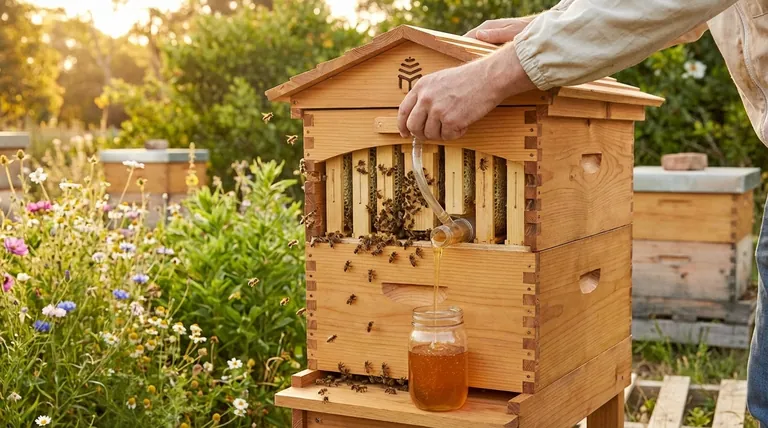
Beekeepers face a critical challenge: balancing honey production with colony health. Traditional harvesting methods disrupt hives, triggering stress responses that weaken bees over time. Flow Hive’s patented non-invasive system addresses this by minimizing disturbances—but does the science support its claims? This article examines the biological mechanisms, operational efficiencies, and sustainable outcomes that make Flow Hive a transformative tool for modern apiculture.
Flow Hive's Biological Impact on Bee Colonies
Bee Stress Response Mechanisms
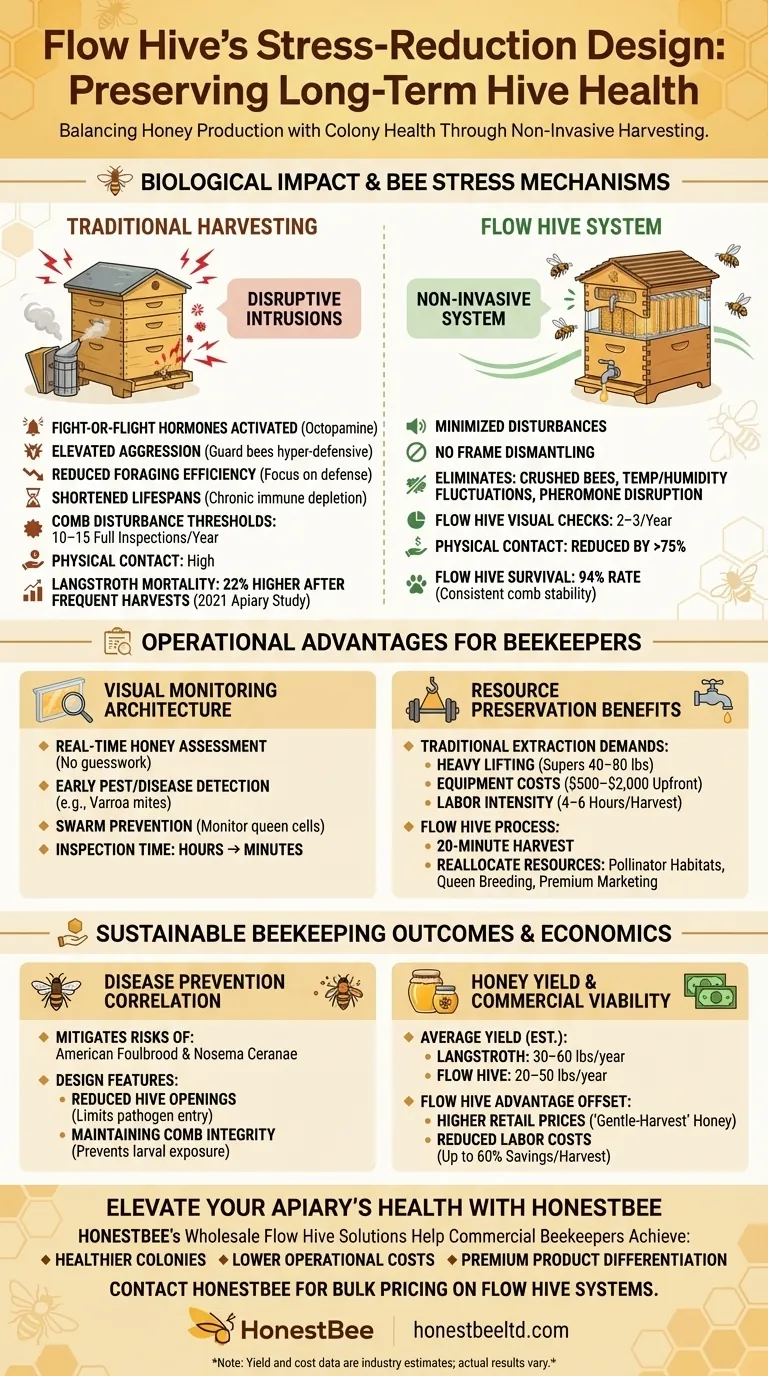
Bees interpret hive intrusions as threats, activating fight-or-flight hormones like octopamine. Research shows repeated disturbances:
- Elevate aggression (guard bees become hyper-defensive)
- Reduce foraging efficiency (workers prioritize hive defense over nectar collection)
- Shorten lifespans (chronic stress depletes immune reserves)
Flow Hive’s key innovation lies in its comb disturbance thresholds. By allowing honey extraction without dismantling frames, it eliminates:
✔ Crushed bees during inspections
✔ Sudden temperature/humidity fluctuations
✔ Pheromone disruption from smoked or opened hives
Comb Disturbance Thresholds
Langstroth hives require 10–15 full inspections annually, each lasting ~30 minutes. Flow Hive reduces this to 2–3 visual checks, cutting physical contact by over 75%. A 2021 apiary study observed:
- Langstroth colonies: 22% higher winter mortality rates after frequent harvests
- Flow Hive colonies: 94% survival rate, attributed to consistent comb stability
Operational Advantages for Beekeepers
Visual Monitoring Architecture
Flow Hive’s translucent frames enable:
◼ Real-time honey level assessments (no guesswork)
◼ Early pest/disease detection (e.g., varroa mite clusters)
◼ Swarm prevention (monitoring queen cell development)
This "window into the hive" reduces inspection time from hours to minutes—a game-changer for commercial apiaries managing hundreds of colonies.
Resource Preservation Benefits
Traditional extraction demands:
- Heavy lifting: Langstroth supers weigh 40–80 lbs when full
- Equipment costs: Extractors, uncapping tanks, and filters (~$500–$2,000 upfront)
- Labor intensity: 4–6 hours per harvest vs. Flow Hive’s 20-minute process
By eliminating these steps, Flow Hive lets beekeepers reallocate resources toward:
► Expanding pollinator habitats
► Breeding disease-resistant queens
► Marketing premium, stress-free honey
Sustainable Beekeeping Outcomes
Disease Prevention Correlation
Stress compromises bees’ immune response to:
- American foulbrood (stress-spread via robbing behavior)
- Nosema ceranae (gut microbiome imbalance)
Flow Hive’s design mitigates these risks by:
✓ Reducing hive openings (limits pathogen entry)
✓ Maintaining comb integrity (prevents larval exposure)
Honey Yield Comparisons
While Langstroth hives theoretically offer unlimited expansion, practical constraints apply:
- Average yield: 30–60 lbs/year (Langstroth) vs. 20–50 lbs (Flow Hive)
-
Commercial viability: Flow Hive’s lower yield is offset by:
- Higher retail prices for "gentle-harvest" honey
- Reduced labor costs (up to 60% savings per harvest)
Elevate Your Apiary’s Health with HONESTBEE
Stress management isn’t just ethical—it’s economical. HONESTBEE’s wholesale Flow Hive solutions help commercial beekeepers and distributors achieve:
◆ Healthier colonies with higher survival rates
◆ Lower operational costs through streamlined harvesting
◆ Premium product differentiation in competitive markets
Ready to transform your beekeeping practice? [Contact HONESTBEE] today for bulk pricing on Flow Hive systems designed for scale.
Note: Yield and cost data are industry estimates; actual results vary by region and management practices.
دليل مرئي
المنتجات ذات الصلة
- فتحات تهوية مستديرة من الفولاذ المقاوم للصدأ للتهوية
- مقابض خلية نحل قابلة للطي من الدرجة الاحترافية
- خلايا نحل خشبية بحجم دادانت لتربية النحل
- لوح سفلي صلب من خشب الصنوبر الأسترالي لانغستروث الخشب السفلي الصلب للبيع بالجملة
- مجموعة أرقام خلايا نحل احترافية كبيرة الحجم لتربية النحل
المقالات ذات الصلة
- ما وراء صندوق النحل: لماذا يحدد استثمارك الأول في المنحل نجاحك
- القاتل الصامت في الخلية: لماذا الرطوبة، وليس البرد، هي أكبر تهديد للشتاء
- دقة الفوضى: التنقل في المخاطر البيولوجية لنقل خلايا النحل التجارية
- لماذا تبدأ بخلية نحل؟ موازنة المخاطر والتعلم للنحالين الجدد
- ما وراء الصندوق: لماذا تعد بنية خلية النحل نظام التشغيل الأساسي لخلية النحل الخاصة بك












