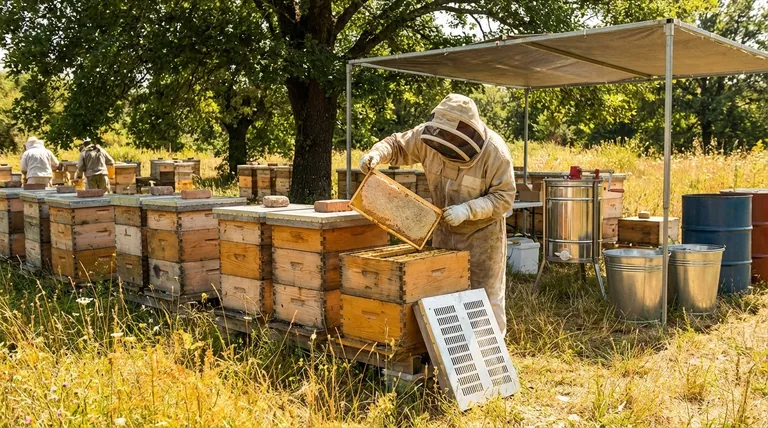
Summer presents both opportunity and risk for commercial apiaries. While nectar flows peak, colonies face intensified threats from mites, heat stress, and swarming impulses. This guide reveals field-tested strategies to optimize honey yields while safeguarding hive vitality—methods refined by professional beekeepers managing hundreds of colonies.
Summer Hive Dynamics: Working With Nature’s Rhythms
Understanding the Nectar Flow Threshold
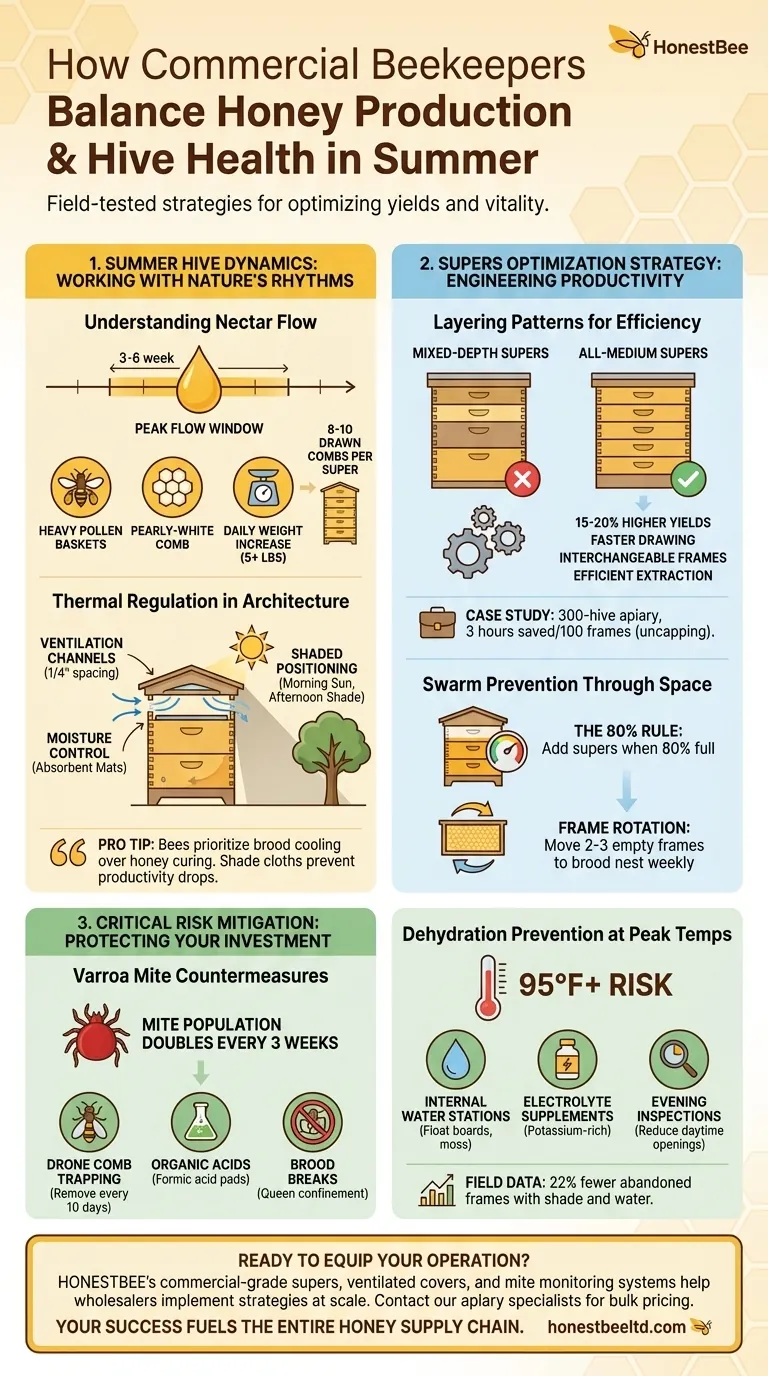
Honey production hinges on recognizing your region’s precise nectar flow window—typically 3-6 weeks when flowers secrete surplus sugars. Research shows colonies need 8-10 frames of drawn comb per super during this period to store liquid nectar before curing it into honey.
Key indicators of peak flow:
- Bees work dawn-to-dusk with heavy pollen baskets
- Wax production surges (look for pearly-white comb)
- Hive weight increases by 5+ lbs daily
Thermal Regulation in Hive Architecture
Bees dedicate 30-40% of summer labor to cooling hives. Strategic modifications prevent heat stress:
- Ventilation channels: Space boxes 1/4" apart for passive airflow
- Shaded positioning: Morning sun exposure with afternoon shade maintains ideal 93-96°F brood temperatures
- Moisture control: Absorbent mats under inner covers reduce condensation that attracts pests
Pro Tip: Bees prioritize brood cooling over honey curing in heatwaves. Temporary shade cloths prevent productivity drops.
Supers Optimization Strategy: Engineering Productivity
Layering Patterns for Maximum Comb Efficiency
Commercial operations using medium-depth supers report 15-20% higher yields versus mixed-depth setups. Uniformity enables:
- Faster comb drawing: Bees expend less energy adapting to varied cell sizes
- Interchangeable frames: Simplifies rotation between honey and brood chambers
- Mechanical extraction efficiency: Centrifugal force distributes evenly in standardized equipment
Case Study: A 300-hive apiary switching to all-medium supers reduced uncapping time by 3 hours per 100 frames.
Swarm Prevention Through Space Allocation
Colonies preparing to swarm slow honey production by 50%. Prevent this through:
- The 80% rule: Add supers when 80% of existing comb is filled
- Brood chamber management: Keep queen excluders clean to prevent honey-bound brood nests
- Frame rotation: Move 2-3 empty frames into the brood nest weekly to simulate space
Critical Risk Mitigation: Protecting Your Investment
Varroa Mite Surge Countermeasures
Summer mite populations can double every 3 weeks. Integrate these defenses:
- Drone comb trapping: Mites prefer drone brood. Remove capped drone frames every 10 days
- Organic acids: Formic acid pads during honey flow leave no residues in wax
- Brood breaks: Temporary queen confinement disrupts mite reproduction cycles
Dehydration Prevention at Peak Temperatures
Bees risk desiccation when foraging in 95°F+ weather. Support hydration with:
- Internal water stations: Float boards with absorbent moss near hive entrances
- Electrolyte supplements: Potassium-rich solutions boost worker longevity
- Evening inspections: Reduce daytime hive openings that release humidity
Field Data: Apiaries providing shade and water saw 22% fewer abandoned frames during heatwaves.
Ready to Equip Your Operation? HONESTBEE’s commercial-grade supers, ventilated covers, and mite monitoring systems help wholesalers and large apiaries implement these strategies at scale. Contact our apiary specialists today for bulk pricing on summer-ready equipment—because your success fuels the entire honey supply chain.
دليل مرئي
المنتجات ذات الصلة
- HONESTBEE حل تغذية خلية نحل احترافي لتغذية خلية النحل لتربية النحل
- مدخنة عسل النحل المصنوعة من الفولاذ المقاوم للصدأ ومدخنة عسل النحل لتربية النحل
- مجموعة أرقام الخلايا المسطحة الحديثة لتربية النحل
- حامل خلية نحل معدني حامل صندوق نحل لتربية النحل
- حامل خلية نحل بلاستيكي لتربية النحل